Thomas Doe
Social WorkerNulla totam rem metus nunc hendrerit ex voluptatum deleniti laboris, assumenda suspendisse, maecenas malesuada morbi a voluptate massa! Hendrerit, egestas.

Nulla totam rem metus nunc hendrerit ex voluptatum deleniti laboris, assumenda suspendisse, maecenas malesuada morbi a voluptate massa! Hendrerit, egestas.
Sermon Series
Is the door of mercy closed?
"The door of the heart of Jesus, the door of mercy, is not closed." The Lord says through the only apostle of divine mercy, Sister Maria Faustina Kowalska:Matters about suffering
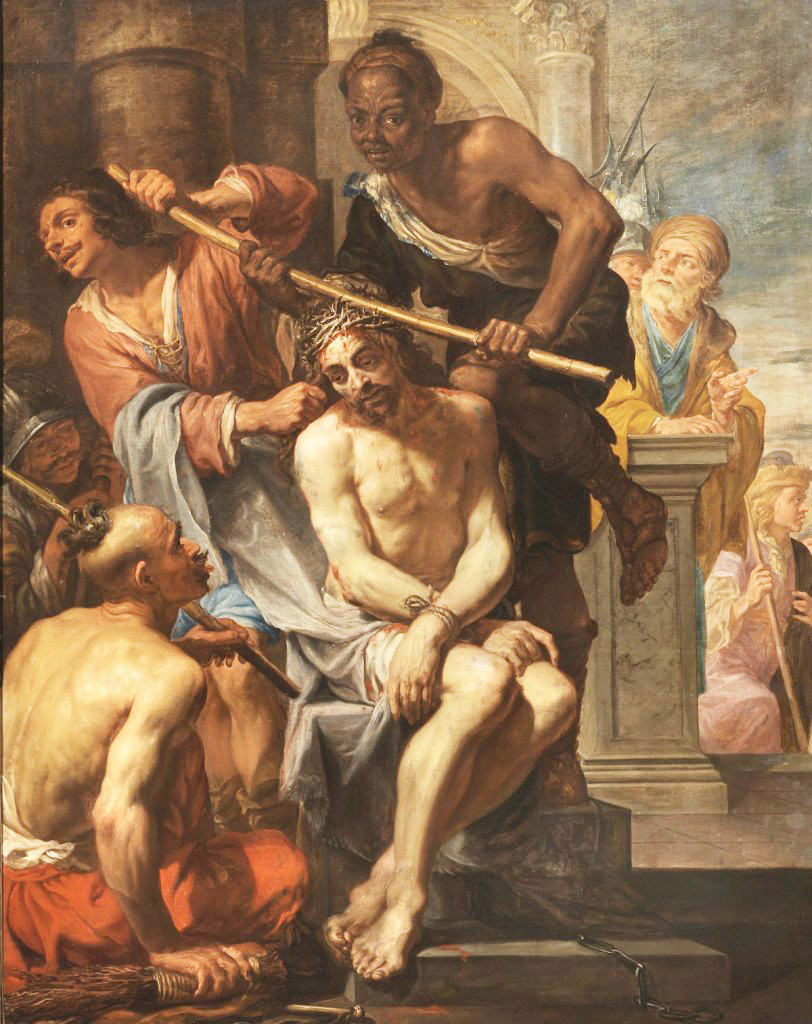
Easy Way to Heal the Soul
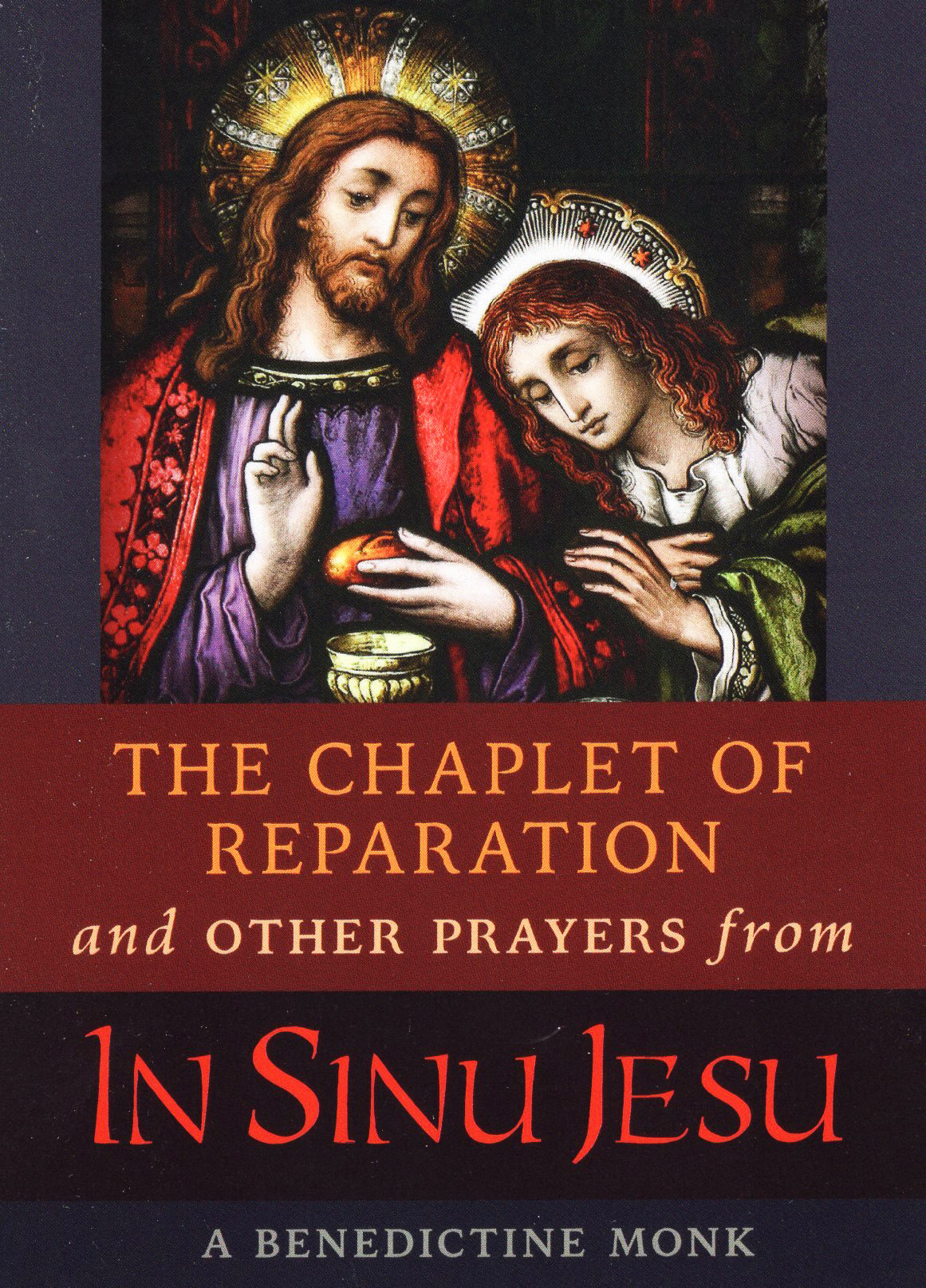
The Holy Catholic Church
The Catholic Church is a communion of 24 autonomous churches, each with its own distinct liturgical, theological, and canonical traditions.The 24 Churches are Oriental Catholic Churches (23) Alexandrian Tradition:
1. Coptic Catholic Church 2. Eritrean Catholic Church 3. Ethiopian Catholic ChurchAntiochian Tradition:
1. Maronite Church 2. Syriac Catholic Church 3. Syro-Malankara Catholic ChurchArmenian Tradition:
1. Armenian Catholic ChurchByzantine Tradition:
1. Albanian Byzantine Catholic Church 2. Belarusian Greek Catholic Church 3. Bulgarian Greek Catholic Church 4. Greek Byzantine Catholic Church 5. Hungarian Greek Catholic Church 6. Italo-Albanian Catholic Church 7. Macedonian Greek Catholic Church 8. Melkite Greek Catholic Church 9. Romanian Greek Catholic Church 10. Russian Greek Catholic Church 11. Ruthenian Greek Catholic Church 12. Slovak Greek Catholic Church 13. Ukrainian Greek Catholic ChurchChaldean Tradition:
1. Chaldean Catholic Church 2. Syro-Malabar Catholic ChurchWestern Catholic Church Latin Tradition:
1. Latin Church (also known as the Roman Catholic Church). These churches recognise the supremacy of the Pope and live theWhy did God become man?
(CCC 456) In the Nicene Creed, we confess, "For us men and for our salvation, he came down from heaven and was incarnate by the Holy Spirit of the Virgin Mary and became a man." CCC 457 1. Our sick human nature needed a physician. 2. The dead needed a life-giver. 3. Fallen man needed a healer. 4. He who had lost his share of goodness needed a restorer. 5. He who was shut up in darkness needed the presence of light. 6. The prisoner seeks a saviour. 7. The prisoner seeks a helper. 8. We who bear the yoke of slavery await the deliverer. For the above eight reasons, humanity was in a state ofThe supreme mystery of the Incarnation
1) • Jesus - Saviour • Christ - Anointed One • Lord - refers to divine sovereignty. • Son of God / Only Begotten - refers to the unique and eternal relationship with God the Father. 2. The Incarnation is the mystery of the miraculous union of the divine nature and the human nature in the one person, Jesus Christ. 3. Our Lord assumed human nature for Himself from the Holy Virgin Mary, by the power of the Holy Spirit. That body belongs to that divine person. Not even the Holy Mother can claim ownership of it. In addition, He also assume a human body. 4. Do we enter into it despite knowing the truth that God the Father has established the Holy Catholic Church on earth through Jesus Christ as an essential element of salvation? Those who do not abide in it will not be saved. 5. All the merits of the crucifixion of Jesus Christ has been given by God the Father only to the one Church, of which St. Peter is the head. This church has four (4) marks. (1) It is one, (2) It is holy, (3) It is universal, and (4) It is apostolic. 6. Why did Jesus Christ become the only mediator before the Father? The human nature that He took on was not taken away from Him even after His death, resurrection, and ascension to heaven. It still exists!!! If a human person wants to approach God the Spirit, someone who took on human nature must mediate before the Father. (It is enough to bear it). That is why the Apostle John wrote this in his Gospel. No one can approach God without the Son!! 7. (CCC 1445) Whatever you bind on earth will be bound in heaven.What is the meaning of the Most Holy Eucharist?
God created man in the unity of the heavenly feminine. He promised a Saviour for the unity lost by sin. He dreamed of the saving event through the sacrifice. He gave birth to his people and trained them. He made a covenant with Abraham and asked him to offer his son as a sacrifice. He made a covenant with the blood sprinkled on Mount Sinai. He set up the Ark of the promise to dwell with his people. He gave manna from heaven. He made the offering of animal sacrifices a symbol of faith. God established the Holy Eucharist as the Passover Lamb who bears the sins of the world and became the presence of the word of the Eucharist. In the Church, the Eucharist continues the plan of salvation through the Holy Blood, born of heavenly unity. The Eucharist is the supreme mystery of God in the Church, prayer, worship, celebra-When did God's plan to establish the Eucharist begin?
Divine Mercy is the plan of salvation through the Blood before the foundation of the world. When God promised the Saviour for the atonement of sins, the Holy Eucharist was foretold (1 Peter 1/20). God worked through the firstborn Israel through the centuries to realise this dream. The Holy Scriptures are a history of faith centred on divine grace rather than the cultural history of Israel. The priesthood of Melchizedek, the sacrificial covenant with Abraham, the blood covenant, the sacrifice, the Passover, the Sinai covenant, the manna, the tabernacle, the ark of the covenant, the temple in Jerusalem, the animal sacrifices, the sacrifice of Elijah, and the prophecy of Micah are shadows of the eternal covenant. These cannot be dismissed as cultural elements. The Lamb who takes away the sins of the world taught through signs that He is the bread that came down from heaven. As the good shepherd who came to give his life to redeem and to give his life skilfully, he established the new Passover by providing a model of service and demonstrating his authority to forgive sins. On the day of the Resurrection, through the long Emmaus event, the divine meaning of the words was revealed by the Holy Eucharist. He ascended to heaven with the promise that he would be with us until the end of the age. The Holy Spirit is the one who continues the work through prayer in the Church. This mystery is not a cultural celebration that even the Pope can create in a single country. When Aaron performed cultural worship, God gaveThe three (3) stages of prayer
The Catechism of the Catholic Church, CCC, in Chapter 3, Article 1 1, paragraphs 2700, 2705, and 2709, explains the three anointing prayers.(1) Vocal Prayer: Verbal Prayer/Prayer Through Recitation:
We recite or confess the prayers that we have memorised. This is called verbal prayer. Through this, individuals who are in sin can turn away from it and live a normal life. As a result, they get the result of knowing Jesus. This result is grace. Grace is anointing. Thus, we receive the "first anointing". For this prayer, we use our tongue + our language.(2) Meditation:
In this form of prayer, there is complete silence. In deep reflection, we converse with God in the language of love through our hearts. Or, we pray. This is called meditation. For this prayer, we use not the tongue but the heart. (Here we receive the second anointing). Through this, we get the result of being with Jesus. And the gifts begin to abound. Gradually, they begin a life of ministry. Being with Jesus means being in fellowship with Him. What is this fellowship? Let's see how many definitions we have for this. 7. 1. Presence (being in the presence of Jesus).(3) Contemplative Prayer CCC Part 4, Chapter 3, Article 1, Paragraph: 2709
The third prayer, contemplative prayer, is the most important third anointing. (Obey Jesus). Here is a very important thing to remember. That is, praying with the Spirit. Therefore, (1) Silence, (2) Solitude - (Time + Place), (3) Purity of Heart. First: Through vocal prayer, the first anointing - using our language (+tongue) is obtained. Second: Through prayer meditation - using the language of love (heart). The result/grace/anointing are obtained. Third: Through prayer, contemplative/meditation prayer (God's language + Spirit). The most important anointing is obtained through this. "The great grace of 'obeying Jesus' is received. One thing has been left out here. That is, the third What is prayer? It did not say how to do it. Because this is a big problem. Prayer cannot be fully explaine; it can only be experienced What is meditative/dhyanayogic prayer? How can it be done?(1) Spiritual perspective
"Silence + solitude (place + time to pray alone) + purity of heart" Our speech, thought, and action are confined to the external. The(2) Biological perspective / Biological survey
All the vital forces in our body are combined together and confined to the mind. The mind is confined to the soul. The soul is confined to the soul. Then the soul seeks the will of God. This is what is called biological contemplative prayer.(3) Theological View
The greatest theologian the world has ever seen, St. Paul, has presented this fact very simply. "Conversation with God about heavenly mysteries." This is called contemplative prayer. The authoritative teaching books of the ChurchThe Second Vatican Council & the CCC
Two books containing the official teachings of the Catholic Church are now available everywhere. (1) The Acts of the Second Vatican Council are available in Malayalam and English.The second book is known as the CCC, which is a catechism.
What are the Acts of the Second Vatican Council? The following is an explanation of how it came about. On January 25, 1959, on the 90th day after the election of Angelo Giuseppe Roncalli, the Patriarch of Venice, as Pope John XXIII, an unexpected proclamation was made. The decision of the Father to convene the 21st Ecumenical Council was made clear in the document "Superno Dei Nuthu". The preparations for the Council officially began on May 17, 1959. A central commission, ten subcommissions, and two secretarial committees were formed. After almost three and a half years of effort, the draft documentsThe 16 documents of the Second Vatican Council.
(1) Holy Church (2) Divine Revelation (3) Liturgy (4) Eastern Churches (5) Bishops (6) Priests (7) Monastic life (8) Priestly training (9) Lay missionary work (10) Missionary work (11) Education (12) Ecclesiastical unity (13) Non-Christian religions (14) Freedom (15) Social Media (16) The Church in the Modern World. In addition to the Second Vatican Council, 20 more councils were convened in the 21st century. A total of 21 councils. All of these took place when, where, and under which pope. We need to understand a little more about the Catechism of the CatholicThe Catechism of the Catholic Church (CCC) (It is the teaching prepared by those Church Fathers for the renewal of the Church.)
The CCC contains only the fundamental teachings necessary for the renewal and growth of the people of God. This will greatly help the Reformation movement to become more Catholic and for there to be a renewal in the Reformation. At the same time, the main task entrusted to the Council by Pope John XXIII was to preserve the precious treasure of Christian ideals and to present them in a way that can be understood by Christian believers and all people of goodwill. For this reason, the Council's goal was to present with serenity the strength and beauty of the Church's code of faith, rather than subjecting the errors of time to trial. At the opening ceremony of the Second Vatican Council, the Holy Father Pope John XXIII said, "In the light, the Church will be spiritually enriched and, at the same time, acquire new strength and vigour, and she will turn towards the future with confidence, and we will be able to walk without difficulty on the path that the Church has followed for 20 centuries." This book was given its shape and form after nearly six (6) years of intensive work. In 1986, the Holy Father John Paul II appointed a commission of bishops and cardinals under the chairmanship of Cardinal Joseph Ratzinger. Seven bishops, who were experts in theology and catechesis, assisted the commission in carrying out its mission, as suggested by the Synod Fathers. In this undertaking, theIndulgences There are two types of consequences for sin.
1. Eternal punishment (hell) 2. Temporal punishment A person who receives absolution through the sacrament of Confession is exempted from eternal punishment (hell). However, the temporal punishment of sin remains. If the atonement is not made in this world through appropriate acts of penance, the person will suffer temporal punishment in purgatory after death. "The blessing of absolution removes sin. But it does not resolve all the disorders that sin has caused. Although raised from sin, the sinner must fully restore his spiritual health. He must do something more to compensate for his sin: he must "make reparation" for his sins, or "make atonement". This act of penance is also called "penance". (CCC 1459) A believer living on earth can obtain remission from his own temporal punishment or that of the souls in purgatory by fulfilling certain conditions established by the Holy Church. This remission is granted from the spiritual treasury of the Church. The "spiritual treasury" of the Church is formed by the merits of Christ and his atoning sacrifice, together with the merits of the prayers and renunciation of the Blessed Virgin Mary and all the saints. The Pope, the head of the Church, as the successor of the Apostle Peter, has the authority to distribute and use this spiritual treasury of grace. "Whatever you bind on earth will be bound in heaven, and whatever you loose on earth will be loosed in heaven."Plenary and Partial Indulgences
An indulgence can be partial or plenary, depending on whether it partially or completely relieves the temporal punishment due to sin. Any believer can obtain indulgences for himself or for the dead. (CCC 1471) By obtaining a plenary indulgence, temporal punishment is completely removed. By obtaining a partial indulgence, temporal punishment is partially removed. According to the declaration of Pope Paul VI in the document "Uirreshila ila kirauhazhamirala", the conditions for receiving absolution are as follows. (Plenary absolution can be obtained if the indulgences declared by the Holy Church are performed in accordance with the following conditions.) 1. There must be the intention to obtain absolution. 2. The sacrament of confession must be received. (It must be performed within 20 days before or after performing the plenary indulgences.) 3. The Eucharist must be received. 4. Pray for the Pope's missions. (Any official prayer of the Church for the Pope will suffice.) 1 Heaven. 1 Goodness. 1 Trinity. Offer it to the Pope's mission. 5. We must renounce mortal and venial sins and turn away from sinful ways. (If one of the conditions mentioned above is not fulfilled, a partial absolution is granted.) Plenary absolution can only be received once a day. However, a dying person can receive more than one plenary absolution in a day. Absolution cannot be received for another person living on earth. A person who receives a plenary absolution is in the same state of grace that he received at baptism. The Church teaches that at the moment of death, one can go directly to heaven without purgatory. (Absolution is never a substitute for repentanceWorks and prayers for a plenary indulgence
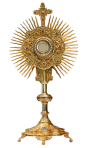
Adoration for more than half an hour in the presence of the Blessed Sacrament / Devoutly receiving the Pope's blessing for Rome and the world (even through audiovisual media such as radio and television) / Devoutly participating in the liturgical rites of Good Friday, bowing and kissing the Cross / Participating in meditation for three full days / For newly ordained priests at their first Holy Communion and for those who devoutly participate in that Mass / For those who receive the Holy Eucharist and those who participate in that Mass / For those who receive the Holy Eucharist and those who participate in that Mass / For the Feast of Divine Mercy New Sunday (the Sunday after Easter) Receiving the Holy Eucharist and participating in the prayers in honour of Divine Mercy in any church or chapel, 1 Our Father 1 Hail Mary. 1 Offering prayers of devotion to the Lord of Mercy while reciting the Creed and the image of Mercy, and bowing to it/ Reading the Bible devoutly for half an hour/ Reciting the 5 Divine Mysteries of the Rosary together in a church, family, monastic community or devout organisation/ Visiting the 14 places of the Stations of the Cross established by law and devoutly meditating on the Passion and Death of Jesus on the Cross and reciting the Stations of the Cross. On the day of the consecration of a church or altar, devoutly recite the Stations of the Cross.1Our father 1 Hail Mary, 1 Creed is recited there / On the eve of Easter or on the day of one's own baptism, the baptismal promise is renewed / On the feast of the Apostles and the feast of St. Peter and Paul, using the cross, crucifix, beads, rosary, and medallions consecrated by the Pope or Bishop, the Creed is recited devoutly.