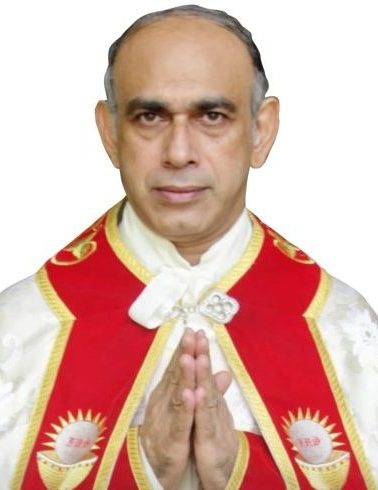
Thomas Doe
Social WorkerNulla totam rem metus nunc hendrerit ex voluptatum deleniti laboris, assumenda suspendisse, maecenas malesuada morbi a voluptate massa! Hendrerit, egestas.


Nulla totam rem metus nunc hendrerit ex voluptatum deleniti laboris, assumenda suspendisse, maecenas malesuada morbi a voluptate massa! Hendrerit, egestas.
The Meaning of the Most Holy Eucharist
God created man in the heavenly unity of the Trinity. When sin destroyed that unity, He promised a Savior to restore it. From the beginning, He envisioned the saving event through
sacrifice. He formed His people and prepared them for this salvation.
He made a covenant with Abraham, asking him to offer his son as a sacrifice. He renewed the covenant with blood on Mount Sinai. He gave His people the Ark of the Covenant so that He might dwell among them. He sent manna from heaven and made animal sacrifices a symbol of faith.
In the fullness of time, God became the Passover Lamb who bore the sins of the world. He instituted the Holy Eucharist, becoming the living presence of the Word of God.
In the Church, the Holy Eucharist was born as the heavenly unity of God and His people, and the plan of salvation through the Eucharist continues to this day. The Holy Eucharist is the supreme mystery of God in the Holy Church’s prayer, worship, celebration of the Word, profession of faith, sacrifice, atonement, covenant, heavenly banquet, and Pentecost. It embraces the whole of theology and spirituality. It is both the mother and the child of the Church.
Through the Second Vatican Council and the Jubilee Year, God is once again reminding us of the Eucharistic focus and wonder that the Church must never lose. The Jubilee Year is a great gift from God for this purpose.
When Did God’s Plan to Establish the Eucharist Begin?
The Eucharist is God’s plan of salvation through the blood of His Son conceived before the foundation of the world.
When God promised a Savior for the atonement of sins, He was already envisioning the Eucharist (1 Peter 1:20). For centuries, He worked through His firstborn, Israel, to bring this plan to fulfillment. The Bible is not merely the cultural history of Israel; it is a history of faith centered on the Eucharist.
The priesthood of Melchizedek, the sacrificial covenant with Abraham, the blood covenant, the sacrifices, the Passover, the Sinai covenant, the manna, the tabernacle, the Ark of the Covenant, the temple in Jerusalem, the animal sacrifices, the offering of Elijah, and the prophecy of Micah—all these are shadows of the eternal covenant. They cannot be dismissed as mere cultural practices.
Through the signs of the Lamb who takes away the sins of the world, Jesus taught, “I am the bread that came down from heaven.” He gave His life for our redemption, and as the Good Shepherd, He demonstrated the power of forgiveness and the example of true ministry. He established the new Passover and became the sacrificial Lamb at Golgotha.
On the day of His resurrection, in the long walk to Emmaus, He revealed the merciful meaning of the Scriptures and offered the Holy Eucharist. He then ascended to heaven with the promise, “I am with you always, until the end of the age.”
The Definition of Worship
There are many definitions of worship. Worship is the lifting of our hearts to God. It is the surrender of praise and gratitude to God the Father, through the Son, in the Holy Spirit—by the children of God, under the leadership of Jesus, the Head of the Church.
Quite simply, worship is being with the God who, in His mercy, chose to be with us. It is our response to God’s infinite love—the love of the Father who gave His only Son to save us, the mercy of God made flesh in Jesus Christ. This is the Holy Divine Mercy.
It is the mercy that lifts up sinners, heals the sick, frees the captives, gives sight to the blind and hearing to the deaf, forgives sins, and raises the dead. It is the mercy that instituted the Holy Eucharist to remain with us forever and the mercy that poured out the Holy Spirit to sanctify us. All these mercies are the divine gifts embodied in Jesus.
It is our duty to always worship, praise, and glorify God. In the Holy Hour, we fulfill that duty together with Him
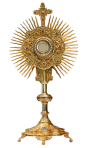
Adoration is more than devotion; it is an encounter — a personal moment with the living God, present in the Blessed Sacrament. Day and night, across the world, countless adorers kneel in silence, lifting their hearts in prayer, interceding for the Church, and drawing strength from the Heart of Christ.
As Jesus invited His disciples, He invites us too: “Could you not watch one hour with me?” (Matthew 26:40). In response, we come to Him — not just for an hour, but perpetually, offering our love, gratitude, and faith in His real presence.
This section offers prayers and reflections to deepen your time of Eucharistic Adoration. Whether you seek silence, intercession, thanksgiving, or healing — may these words help you rest in the peace of Christ and draw nearer to His Eucharistic Heart.